The Window of Tolerance is a concept describing an optimal state of nervous system arousal—when a person is alert, present, and engaged without feeling overwhelmed. Within this window, we feel connected, think clearly, learn, and handle stress effectively.
When we move outside of this window, we may become hyperaroused (anxiety, panic, anger) or hypoaroused (numbness, dissociation, shutdown). These states often show up when we’re under significant stress, perceive threat, or when something activates past trauma or painful experiences.
When I first learned about the Window of Tolerance in graduate school, it completely changed how I understood my own reactions and those of my clients. It offered a compassionate way to see why we sometimes feel steady and capable, but other times feel out of control, shut down, or unlike ourselves. In this post, I’ll explain the Window of Tolerance and address some common questions to help you better understand your own nervous system.
What Does It Feel Like to Be in My Window of Tolerance?
There are several helpful diagrams online that depict the Window of Tolerance, but I especially like one from the National Institute for the Clinical Application of Behavioral Medicine.
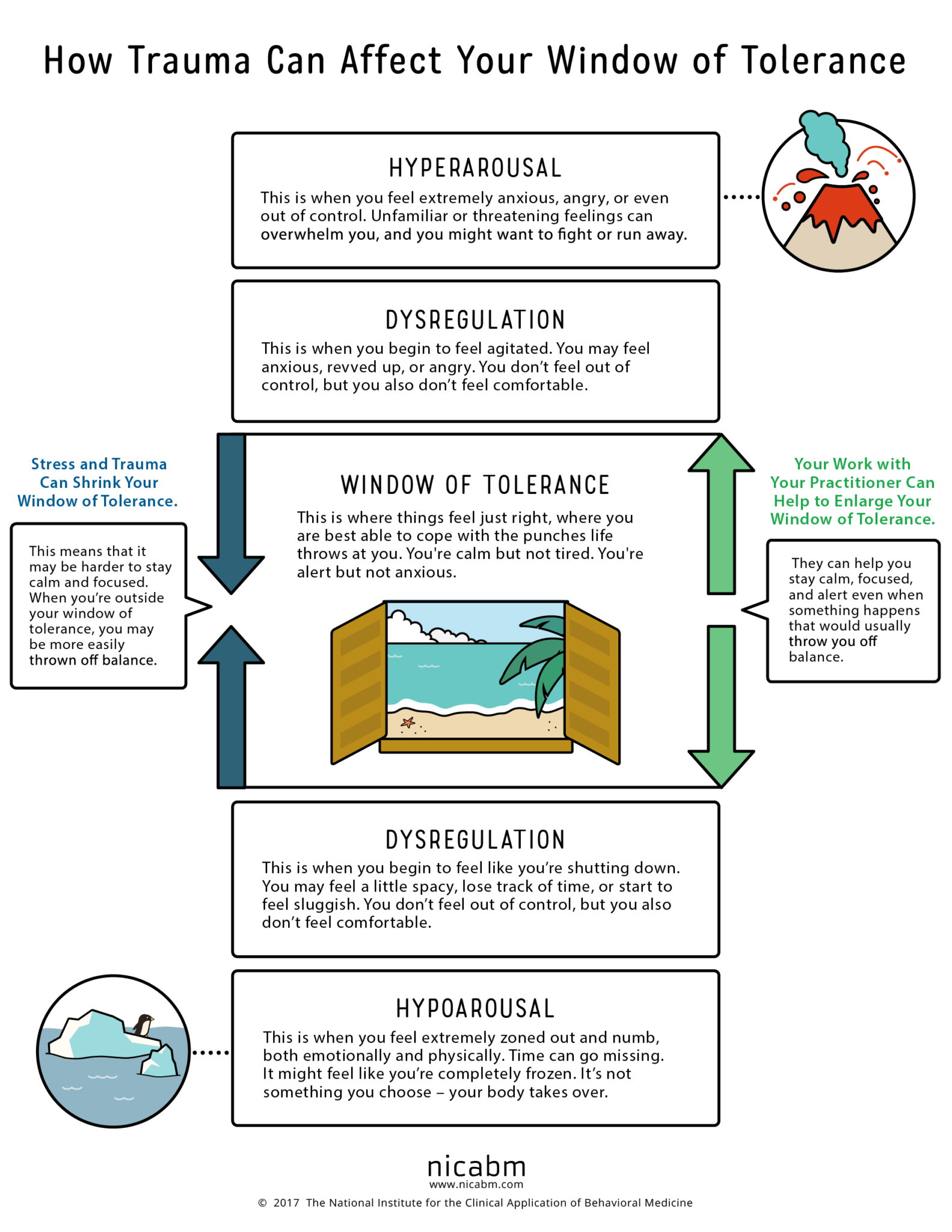
As the diagram shows, when we’re within our Window of Tolerance, we feel calm and alert. We’re able to think clearly, stay present with our emotions, and manage stressors without becoming overwhelmed.
For example, imagine you’re driving to work and spill coffee on your shirt. If you’re in your Window of Tolerance, you may feel irritated or annoyed, but you can notice that irritation, manage it, and bounce back without it taking over the rest of your day. You might even joke about it with colleagues later that day.
It’s important to note that everyone’s Window of Tolerance is different. You might read that example and think, “I can’t imagine ever spilling coffee on myself and quickly bouncing back.” If that’s you, that’s okay! That’s simply useful information about your nervous system–not a personal failing.
Many factors can affect a person’s Window of Tolerance. Some are temporary, while others are long-term. Adequate sleep, regular nourishment, movement, mindfulness practices, and supportive relationships can help expand the window. Chronic stress, poor sleep, isolation, and trauma can narrow it. A narrower Window of Tolerance means that stressors others might see as “small” can feel overwhelming.
For example, if your childhood home felt chaotic and unpredictable, something seemingly minor—like noticing that your partner is upset—may trigger old feelings of dread or instability. The intensity of that reaction isn’t about the present moment alone; it’s shaped by past experiences that shaped your nervous system to view this as a threat.
If your Window of Tolerance feels more narrow than others’, consider that as information about your history, experiences, and needs, rather than evidence of weakness or defect.
When we move outside our Window of Tolerance, the nervous system shifts into dysregulation and, eventually, into survival mode. This experience can look very different for different people.
What Does It Feel Like to Go Outside of My Window of Tolerance?
As the diagram illustrates, moving outside the Window of Tolerance can happen in two primary directions: toward hyperarousal (too much activation) or hypoarousal (too little activation).
Hyperarousal
In hyperarousal, the fight-or-flight survival system is active. The situation feels overwhelming, urgent, or dangerous, and there’s often a strong impulse to escape or act. You may notice an increased heart rate, muscle tension, hypervigilance, racing thoughts, or emotions that feel too big to manage.
Returning to the coffee example: this might look like spilling coffee, pulling over to the side of the road, and beginning to have an anxiety attack. The person who laughs it off is not “better” than the person who panics. They simply have different nervous system responses in that moment.
Hypoarousal
In hypoarousal, the freeze or submit survival system is active. Here, the body conserves energy rather than mobilizing it. You might feel numb, disconnected, or foggy. Breathing and heart rate may slow, thoughts may feel foggy, and you may feel detached from your body or surroundings.
In this version of the coffee example, the person spills coffee, continues driving on “autopilot,” and then sits in their work parking lot feeling blank or shut down.
As pictured in the diagram, these states exist on a spectrum. Dysregulation can occur without full hyper- or hypoarousal, and we may shift between these states depending on context and stress levels.
The Brain Outside the Window of Tolerance — and Why You Can’t ‘Think’ Your Way Back In
Outside our Window of Tolerance, the brain and body begin preparing for survival. Resources are redirected toward fight, flight, or freeze responses—systems designed to keep us alive in the face of threat.
What’s not prioritized in these moments? Reflective thinking, learning, perspective-taking, calm communication, or playfulness.
As a result, access to brain regions supporting reasoning, impulse control, and language is reduced. These areas don’t shut off; they simply receive fewer resources as the nervous system focuses on self-protection.
When this happens, we’re more likely to act impulsively or say things we’ll later regret. We may struggle with concentration or memory, or get pulled into shame spirals. This isn’t because you’re failing or lacking insight. It’s because your body is doing exactly what it learned to do to keep you safe.
This is why you can’t simply think your way back into your Window of Tolerance. Mental strategies like logical reassurance or positive self-talk aren’t enough when your nervous system is in survival mode.
Instead, returning to the Window of Tolerance usually requires bottom-up regulation—approaches that help your body register safety. This might include slow, steady breathing; gently orienting to your surroundings (such as noticing colors or shapes in the room); feeling your feet on the floor; or stepping away to connect with something soothing, like petting your dog.
Such experiences help signal safety to the nervous system. As the body settles, access to thinking, reflection, and perspective naturally returns.
Where Do I Go From Here?
Understanding your Window of Tolerance can be a helpful first step, but many people find it difficult to apply these ideas on their own, especially when stress or trauma has shaped the nervous system over time.
If you’re interested in working with a therapist who takes a nervous-system-informed approach, you’re welcome to reach out to schedule a consultation to learn more about my therapy services.
